


GPT Image 2.5 vs Nano Banana: The 2026 AI Image Comparison
One side of this matchup is real and shipping; the other is a rumor moving fast. Google's Nano Banana 2 (model ID gemini-3.1-flash-image) has been live across Google's apps since February 2026. OpenAI's GPT Image 2.5 has not been announced: as of September 9, 2026, it exists only as Arena codenames, build strings, and upgrade teases. This comparison separates what each company has actually published from what the community is speculating about — no benchmark folklore, no invented specs.
Published September 9, 2026
Why This Comparison Is Different
Search for GPT Image 2.5 vs Nano Banana today and you will find confident spec sheets for a model that does not officially exist. OpenAI's developer docs list exactly one current image model: gpt-image-2, released as ChatGPT Images 2.0 on April 21, 2026. Everything attributed to “2.5” traces back to two anonymous Arena checkpoints and a September 3 upgrade report — interesting signals, but not product facts.
So this article does two jobs. First, it tracks the GPT Image 2.5 rumor honestly: what was seen, when, and why it stays a rumor. Second, it compares the models you can actually use today — GPT Image 2 against Google's Nano Banana 2 — using only the vendors' own announcements, docs, and pricing pages. When a number comes from a third party, we say so.
The Contenders
GPT Image 2 (OpenAI)
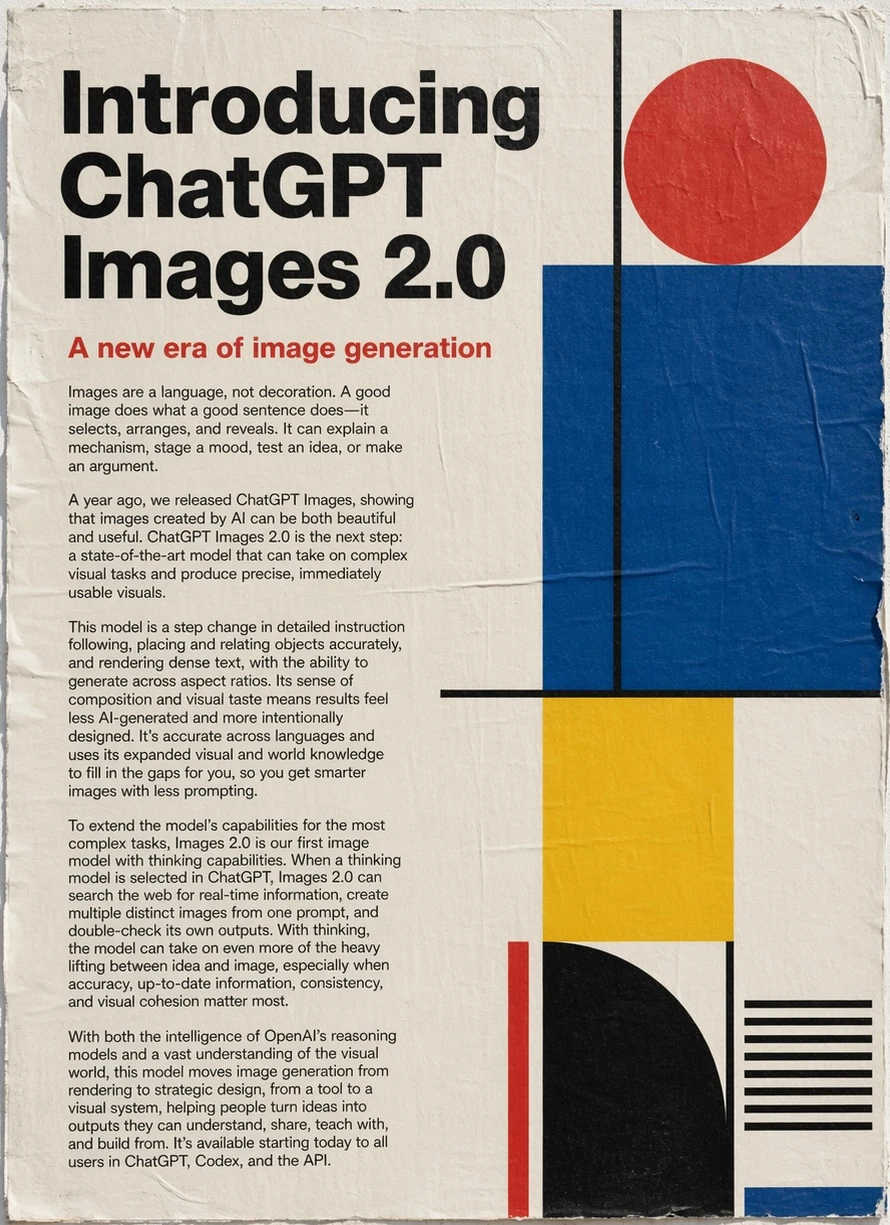
The shipping baseline. State-of-the-art text rendering, stronger multilingual output, advanced visual reasoning, and flexible image sizes — available in ChatGPT and the API.
Maker: OpenAI · Announced April 21, 2026 · ChatGPT + API (snapshot gpt-image-2-2026-04-21)
Nano Banana 2 (Google)
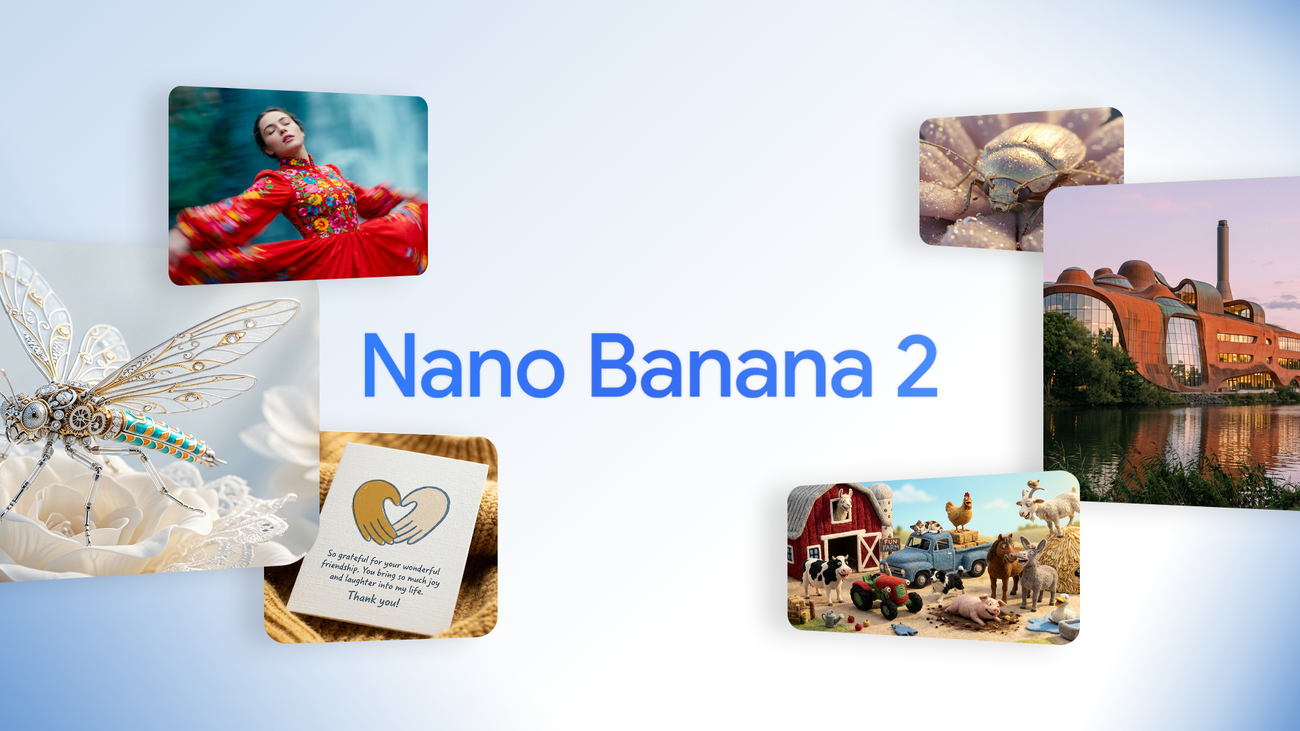
Gemini 3.1 Flash Image — Pro-level world knowledge and reasoning at Flash speed, with web-search grounding, text translation inside images, and 512px–4K output.
Maker: Google DeepMind · Announced February 26, 2026 · Gemini app, Search, AI Studio, API, Vertex AI, Flow, Ads
The lineage detail worth knowing: Google's banana line has shipped three generations in seven months — the original Nano Banana went viral in August 2025, Nano Banana Pro (Gemini 3 Pro Image) arrived in November 2025 with studio-grade control, and Nano Banana 2 merged Pro's intelligence with Flash speed in February 2026. OpenAI's public cadence has been slower: GPT Image 1 (March 2025), GPT Image 1.5 (December 2025), then GPT Image 2 in April 2026. That gap is exactly why the 2.5 rumor is loud — and why it deserves a fact-check.
Specs at a Glance
Every cell below comes from the vendors' own blogs, docs, or pricing pages — except where a row is explicitly marked as a third-party figure or an unconfirmed rumor. Where a company didn't publish a figure, we say so instead of guessing.
| Dimension | GPT Image 2 (official) | Nano Banana 2 (official) |
|---|---|---|
| Maker | OpenAI | Google DeepMind |
| Announced | April 21, 2026 | February 26, 2026 |
| Model ID | gpt-image-2 | gemini-3.1-flash-image |
| Next version | GPT Image 2.5: rumored only — no official model ID, date, or price | Already shipped its refresh (this model) |
| Inputs | Text + image | Text + image, with web-search grounding |
| Output resolution | Flexible sizes; up to 2K ceiling reported (third-party tracker) | 512px to 4K, multiple aspect ratios |
| Text in images | Improved rendering, stronger across languages | Precise rendering + in-image translation & localization |
| Consistency | Multi-turn editing, visual reasoning across revisions | Up to 5 characters + 14 objects per workflow |
| API pricing | $4.00 / 1M output image tokens (standard); $1.00 batch | $60 / 1M output image tokens ≈ $0.067 per image |
| Provenance | Not published in the announcement | SynthID watermarking + C2PA Content Credentials |
GPT Image 2.5: Signal vs Noise
Here is everything behind the GPT Image 2.5 label, as tracked by third-party evidence trackers. On August 22, 2026, observer Mark Kretschmann described two models in OpenAI's anonymous Arena pipeline: mona-lisa-1, presumed to be the GPT Image 2.5 preview, and luna-lisa-alpha, presumed to be a faster Mini variant. On September 3, TestingCatalog quoted upgrade language — “higher-quality results, faster generation, and smarter creative tools” — and a ChatGPT popup was spotted teasing an image upgrade. Build strings referencing gpt-image-2.5 were then reported in a September 1 desktop build.
What the rumor does not contain: an official model ID, a release date, a price, a model card, or any benchmark score. And on September 4, OpenAI's Astra announcement came and went without an image-model launch, weakening the same-day release theory. Community reports of the codenames' quality are also contradictory — one tester praised more natural skin texture and lighting; another said mona-lisa-1 lost a “centaur doing a handstand” prompt against GPT Image 2, Nano Banana Pro, and Grok Imagine Image 2.0; a third said both checkpoints still showed noise artifacts.
The honest read: an OpenAI image upgrade looks plausible and possibly imminent, but every specific claim about GPT Image 2.5 — including the improvements list on sites marketing it today — is unverified. The only baseline with a public number is GPT Image 2 itself, reported by trackers at 1,381±5 Elo on a public text-to-image leaderboard. Treat this comparison accordingly: everything below contrasts shipping models.
Text Rendering & Languages
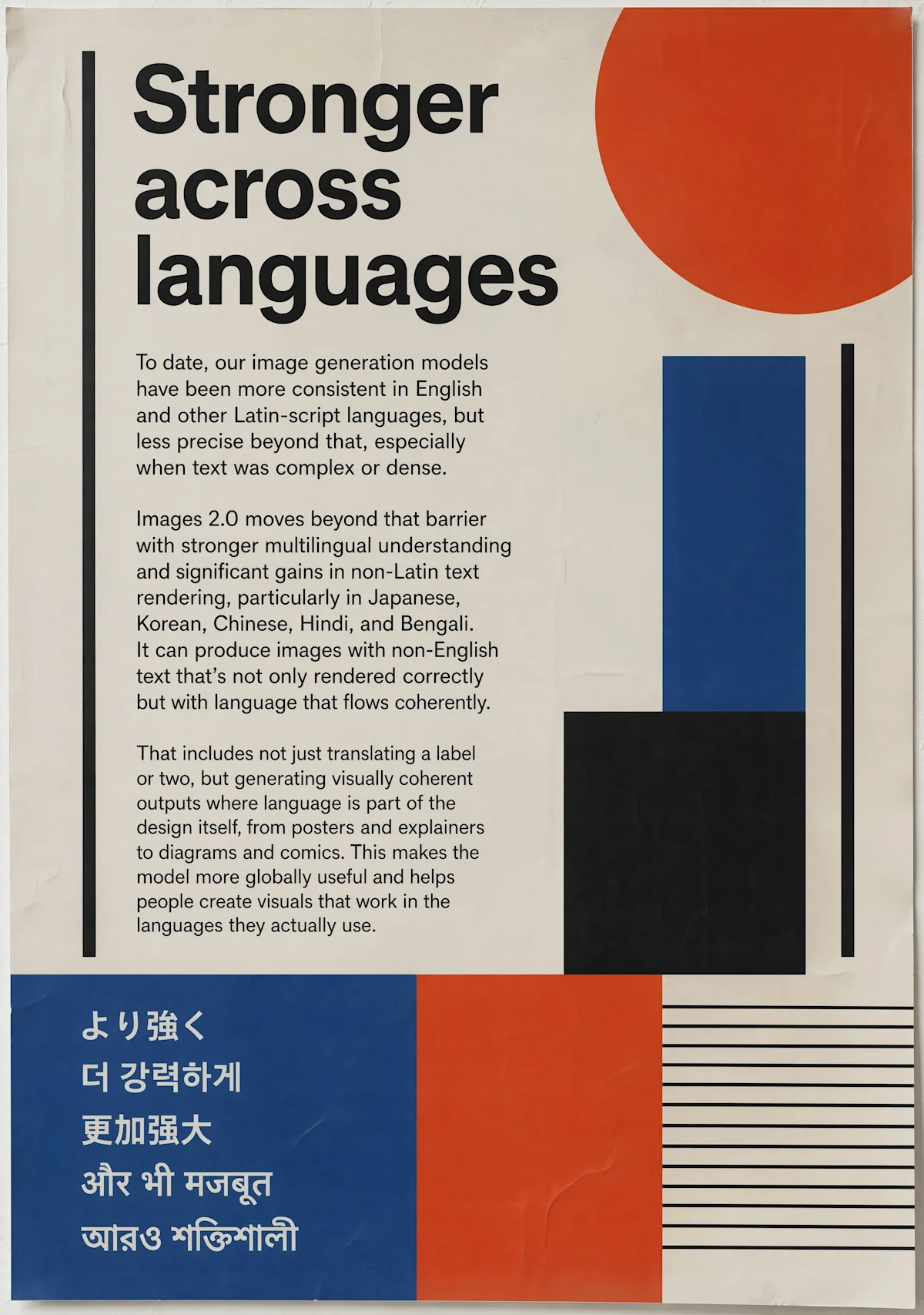
Text-in-image is the capability both vendors chose to headline. OpenAI says ChatGPT Images 2.0 delivers improved text rendering and is “stronger across languages,” showcasing posters, manga pages, and signage in Japanese, Hindi, Korean, and Chinese. Google says Nano Banana 2 generates “accurate, legible text” for mockups and cards — and goes one step further with translation: it can localize text inside an existing image, which Google demonstrated by rendering a wildlife sign in English and then in Hindi.
No head-to-head benchmark exists, so the practical difference is scope: GPT Image 2's multilingual strength is about generating correct scripts from scratch, while Nano Banana 2's grounding plus in-image translation targets localization workflows — one prompt, one edit, multiple markets.
Editing & Consistency
OpenAI positions GPT Image 2 as a “visual thought partner”: a thinking model that can research, reason about source material, and iterate on images across multiple turns. The announcement leans on campaign-style work — magazine spreads, character reference sheets, multi-panel comics that keep identity stable across scenes.
Google put a number on the same problem: Nano Banana 2 maintains character resemblance for up to five characters and the fidelity of up to 14 objects in a single workflow, with stricter instruction following so “the image you get is the image you asked for.”
Notably, the loudest community wish-list item for the rumored GPT Image 2.5 is exactly this category: local edits that don't disturb approved regions, and revision chains that don't accumulate noise. That's a useful signal about where GPT Image 2's real-world friction lies — and a test plan for whenever 2.5 ships.
Resolution & Production Specs
Nano Banana 2 publishes the clearest production envelope: 512px to 4K with full aspect-ratio control, from vertical social posts to wide-screen backdrops. Nano Banana Pro covers the same 1K–4K range for maximum-fidelity work, and the cheaper Nano Banana 2 Lite rounds out the family.
OpenAI's docs promise “flexible image sizes” without publishing a resolution ceiling in the announcement; third-party trackers report GPT Image 2 tops out around 2K and can return up to 8 images per prompt. If your deliverable is a 4K print asset, Google's published specs currently give Nano Banana the documented edge; for generating variations in bulk, GPT Image 2's batch behavior is the reported advantage.
Speed & Pricing
Both vendors price images as tokens, so exact per-image cost depends on size and quality. OpenAI's pricing page lists gpt-image-2 at $4.00 per 1M output image tokens (standard quality, $1.00 in batch) plus $2.50 per 1M text output tokens, and the model page rates its speed “medium.” Google's Gemini API pricing lists Nano Banana 2 at $0.50 per 1M input tokens and $60 per 1M output image tokens — with input images billed at 1,120 tokens each, a standard output image works out to roughly $0.067, climbing toward ~$0.24 at 4K.
| Model | Image output rate | ≈ Per image | Positioning |
|---|---|---|---|
| GPT Image 2 | $4.00 / 1M tokens (std) | Varies by size & quality | Quality leader, medium speed |
| Nano Banana 2 | $60 / 1M tokens | ≈ $0.067 (1,120 tokens) | Default in Gemini, web-grounded |
| Nano Banana 2 Lite | $30 / 1M tokens | ≈ $0.034 (batch ≈ $0.017)* | Fastest, cheapest |
| Nano Banana Pro | $120 / 1M tokens* | ≈ $0.04–$0.24 by resolution* | Max fidelity, 1K–4K |
*Lite per-image figures and Pro rates are derived from third-party calculators and reseller listings on top of Google's token rates; check Google's current published pricing before budgeting.
Speed claims follow the same rule: Google explicitly brands Nano Banana 2 as Flash-tier fast, and made it the default image model in Flow at zero credits. The rumored GPT Image 2.5 is reported to be faster — but no latency figure, hardware condition, or image-size setting has been published, so no comparison is possible yet.
Which Model Should You Pick?
Pick GPT Image 2 if…
- You generate multilingual typography-heavy assets — posters, manga, packaging
- You want a reasoning model that researches before it renders
- You iterate in long multi-turn editing conversations
Pick Nano Banana 2 if…
- You need documented 4K output and exact aspect ratios
- You localize campaigns — in-image text translation is built in
- You want grounded accuracy from real-time web search
- Speed and per-image cost drive your workflow
As for GPT Image 2.5: the only defensible move is to wait for an official model ID and pricing, then re-run your own prompt suite. Watch OpenAI's changelog — not the leaks.
Want to test these models yourself? Try them on LetsMkVideo — generate stills with GPT Image 2 or Nano Banana 2 Lite, start from any prompt on text-to-image, then bring your favorite frames to life with image-to-video.
Honest Limitations
- No vendor-published head-to-head benchmark exists between GPT Image 2 and Nano Banana 2; the 1,381±5 Elo figure is a third-party leaderboard report, not OpenAI's own.
- GPT Image 2's per-image cost depends on token counts that vary with size and quality, so it can't be reduced to a single published number the way Nano Banana 2's 1,120-token standard image can.
- Every GPT Image 2.5 claim in circulation comes from third-party observers; nothing in this article should be read as confirming that model's existence, capabilities, or timing.
- Feature availability differs by surface (ChatGPT tiers vs. Gemini app vs. API preview); check each vendor's current docs before committing to a workflow.
FAQ
Is GPT Image 2.5 out yet?
No. As of September 9, 2026, OpenAI has not announced a model by that name — its docs list gpt-image-2 (April 21, 2026) as the latest. “GPT Image 2.5” currently refers to rumored Arena checkpoints and upgrade teases, not a product.
What is Nano Banana 2, exactly?
It's Google's Gemini 3.1 Flash Image model, announced February 26, 2026. It combines Nano Banana Pro's world knowledge and reasoning with Flash-tier speed, and it's the default image model across the Gemini app and Flow.
Which is better at text in images?
Both vendors claim strong text rendering — no independent benchmark settles it. The documented difference is workflow: Nano Banana 2 can translate and localize text inside an existing image, while GPT Image 2 emphasizes generating correct multilingual typography from scratch.
How much does Nano Banana 2 cost?
Via the Gemini API: $0.50 per 1M input tokens and $60 per 1M output image tokens. A standard image (1,120 output tokens) works out to roughly $0.067; 4K outputs run to about $0.24. Nano Banana 2 Lite halves that again.
What's the difference between Nano Banana 2 and Nano Banana Pro?
Google positions Pro (Gemini 3 Pro Image) for maximum-fidelity, maximum-accuracy tasks at 1K–4K, and Nano Banana 2 for rapid generation, precise instruction following, and web-grounded rendering at Flash speed. Both cover up to 4K.
When will GPT Image 2.5 be released?
Unknown. The strongest signals — a September 3 upgrade report and September 1 build strings — suggest something is close, but OpenAI's September 4 announcements came and went without it. Treat every dated prediction you see online as speculation.